Wednesday, January 31

Reprising the Mystery Artist Game

Do you remember it? We played it last year with three children's book author-illustrators: Wanda Gag, Virginia Lee Burton and William Steig.

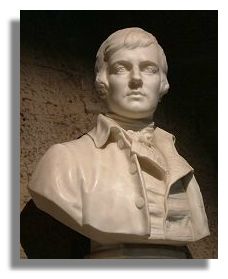
It's time to play again. This time, too, our mystery artist has written and illustrated children's books; although with this particular artist, you may be most familiar with books illustrated for other authors.

Here's a bronze bust sculpted by our mystery artist. Can you guess which children's book illustrator created this?


As always, if you can't guess from this piece, there will be more examples of this artist's work posted later to give you a few more clues.

Labels: ,

|

Tuesday, January 30

Enter the Lists: Guest List

This list is one compiled and contributed by Chris, who preached the sermon at our church last Sunday. This list is from his sermon, and it contains miracles of Elisha that point forward to (or foreshadow) Christ's miracles.
  • Elisha healed Naaman of leprosy.
  • Elisha transformed water in 2 Kings 2.
  • Elisha suspends the characteristics of water when the axe head floats.
  • Elisha raised the Shunammite’s son from the dead.
  • Elisha multiplied the widow’s oil.
  • Elisha gave and took away sight.

Labels: ,

|

Enter the Lists: Too Many To List?

If you sent me a link to a list during the last week and you don't see it here, would you remind me? I was busy last week, and not very good at keeping track of things.

Labels: ,

|

Sunday, January 28

Enter the Lists: A Quote from Mark Dever

. . . about the story of Esther. It includes a list--a list that shows us that sometimes nothing tells the true story like a list.
You may have heard the proverb, "Large doors swing on small hinges." The course of history is often determined by the smallest particulars. This story of Esther is filled with crucial happenings that might have looked like chance to anyone observing the events at the time, and perhaps they looked that way to you. After all, the book explains the Feast of Purim, which comes from the plural Hebrew word for "lots" or "dice." And the roll of the dice gives a random outcome, right? If you think so, then to you this book will be nothing more than a really remarkable story of how all this stuff just seemed to happen. What stuff?
  • Esther just happens to be Jewish, and she just happens to be beautiful.
  • Esther just happens to be favored by the king.
  • Mordecai just happens to hear the plot against the king's life.
  • A report of this just happens to be written in the king's chronicles.
  • Haman just happens to notice that Mordecai does not kneel down before him and he just happens to find out that Mordecai is a Jew.
  • When Haman plots his revenge, the dice just happen to indicate that the date for exacting revenge is put off for almost a year! (What does Proverbs 16:33 say? "The lot is cast into the lap, but its every decision is from the LORD.")
  • Esther happens to get the king's approval to speak, but then she happens to put off her request for another day.
  • Her deferral happens to send Haman out by Mordecai one more time,
  • which just happens to cause him to recount it to his friends.
  • They, in turn, just happen to encourage him to build a scaffold immediately!
  • So Haman just happens to be excited to approach the king early the next morning.
  • It just so happens that the previous night, the mighty king could not command a moments sleep,
  • and he just happened to have had a book brought to him than recounted Mordecai's deed.
  • He then happened to ask whether Mordecai had been rewarded, to which his attendants happened to know the answer. Simply consider for a moment the fact that Mordecai happened not to have been rewarded for having saved the king's life. How unusual this must have been! Someone who saved the king's life never rewarded? I wonder if Mordecai ever chafed under that: "Doesn't he realize what I did for him?" Well, it all just happened.
  • Anyhow, Haman happens to approach the king just when the king is wondering how Mordecai should be honored.
  • Later on, the king happens to return to the queen just when Haman happens to be pleading with Esther in a way that can be misconstrued.
  • The gallows Haman built for Mordecai just happens to be ready when King Xerxes want to hang Haman.
I could keep going. Is that how you read the story of Esther—as so many happenstances and lucky coincidences? Apart from believing that God actively and sovereignly rules over our world, the book of Esther becomes a mere celebration of Mordecai's wisdom and Esther's courage, and, most of all, simply chance and luck.

But, friend, if you are a Christian, this is not how you should read this book. I assure you, this is not why it was written. This book was written to show that God himself acts to achieve the total defeat of his foes and the safety of his people.

From The Message of the Old Testament: Promises Kept by Mark Dever, pages 455, 456.

Update, Tuesday, January 30: The Blue Fish Project has several posts on the book of Esther.

Labels: , ,

|

Sunday's Hymn: God's Providential Care and Guidance

Isaac Watts' paraphrase of Psalm 90 reminds us that even when times are difficult, God is preserving his people through his providential workings.

Our God, Our Help In Ages Past

Our God, our help in ages past,
Our hope for years to come,
Our shelter from the stormy blast,
And our eternal home.

Under the shadow of Thy throne
Thy saints have dwelt secure;
Sufficient is Thine arm alone,
And our defense is sure.

Before the hills in order stood,
Or earth received her frame,
From everlasting Thou art God,
To endless years the same.

Thy Word commands our flesh to dust,
“Return, ye sons of men:”
All nations rose from earth at first,
And turn to earth again.

A thousand ages in Thy sight
Are like an evening gone;
Short as the watch that ends the night
Before the rising sun.

The busy tribes of flesh and blood,
With all their lives and cares,
Are carried downwards by the flood,
And lost in following years.

Time, like an ever rolling stream,
Bears all its sons away;
They fly, forgotten, as a dream
Dies at the opening day.

Like flowery fields the nations stand
Pleased with the morning light;
The flowers beneath the mower’s hand
Lie withering ere ‘tis night.

Our God, our help in ages past,
Our hope for years to come,
Be Thou our guard while troubles last,
And our eternal home.
(Listen.)
Other hymns, worship songs, etc. posted today:Have you posted a hymn for Sunday and I missed it? Let me know by leaving a link in the comments or by emailing me at the address in the sidebar, and I'll add your post to the list.

Labels: ,

|

Enter the Lists: I Haven't Forgotten You

I have a large collection of contributed lists that I haven't had time to post. I'll try to post them this afternoon, but I'm not promising

Labels: ,

|

Saturday, January 27

The Star of Esther

I spent my blogging time yesterday doing more preparation for a women's Bible study this morning. It's a BUWC thing. Women in many of the churches associated are studying the book of Esther this morning, and I'm helping to lead the study in our church.

Unfortunately, my section of the study required some rewriting and rearranging of the questions. The questions given with the study were not very open ended, and I could see where the intended answers were leading. They were making the star of the story of the book of Esther out to be Esther the Queen--the courageous but oppressed woman who fought for social justice, risking her life to do it. (And by way of application: How can the women of the church call for justice like Esther did? What justice issues should the church be addressing?)

I don't like Esther's situation any more than anyone else; I'll admit she had courage; and there are certainly social justice issues Christian women should be addressing. (What about social justice for the unborn, for instance?) But that's not the main point of the book of Esther!

And shouldn't the main point of a study of a book of the Bible be the main point of the book of the Bible? So I've rewritten (or reordered) some of the questions in hopes of focusing most on the providence of God, so that the application is more about how the knowledge of God's providential workings in every situation gives boldness to act in difficult circumstances. I'm not sure I was supposed to do that, but I did.

(Interestingly, in the questions as listed in the original study, which is supposed to take a couple of hours to go through, the providential God who is the real Star of Esther--the Star who never takes the stage--has two small mentions.)

Well, I'm off to get ready to go to the gallows. No time to proof read, so either ignore the mistakes or point them out to me in the comments so I can correct them when I get back. I prefer the second option.

Update: The study went very well. What a wonderful bunch of thinking Christian ladies! Every single one was well prepared, and there were more attending than I'd expected. It made me very happy that we had an outspoken objection or two to the premises behind the questions before we even got to the section I was leading, so I didn't have to take the group anywhere they weren't already going. I'll respond to the comments later, but now I've got the rest of a busy Saturday to finish.

Artwork: Esther and Mordecai, by Aert de Gelder.

Labels:

|

Thursday, January 25

Enter the Lists: For Rabbie Burns Day

|

Wednesday, January 24

For Rena

Could you resend your email to me and check the return address on it? My response to you came back undeliverable.
|

A Freebie For You

My latest project has been reworking and compiling all the posts on the attributes of God from a couple of years ago. A while ago I got a phone call from a man in Texas who wanted permission to put all those posts together and use them for a Sunday School class for young marrieds or college students or something like that, and that gave me the idea to make my own pdf of them all. You'll find the final result available for downloading here at my Squarespace place, along with the pdf files of the transcripts of the Learner's Exchange lessons by J. I. Packer.

Someday, when I get around to it, I might actually move over to Squarespace, but right now, it's only in the planning stages.
|

Tuesday, January 23

Winterscapes

Copyright © 2006, Andrew Stark. All rights reserved.
(click for larger view)
Those of you who enjoyed yesterday's photo might also like looking through oldest son's new gallery of winter photos. This photo was taking up on the Dempster Highway last November.
|

Enter the Lists: Grief, The Old Testament, and Old Regular

This is the month for everything listish on this blog. Have you posted a list--any list on any topic? Please send me the link, I'll include your post in this month's round up of lists of all sorts.

Labels: ,

|

Monday, January 22

Wonderland Walk

Copyright © 2006, Andrew Stark. All rights reserved.
(click for larger view)
|

Enter the Lists: Fondue and the Puritans

This is the month for everything listish on this blog. Have you posted a list? Any list on any topic? Please send me the link, I'll include your post in this month's round up of lists of all sorts.

Labels: ,

|

Sunday, January 21

Sunday's Hymn: God's Providential Care and Guidance

Savior, Like A Shepherd Lead Us

Savior, like a shepherd lead us, much we need Thy tender care;
In Thy pleasant pastures feed us, for our use Thy folds prepare.
Blessèd Jesus, blessèd Jesus! Thou hast bought us, Thine we are.

We are Thine, Thou dost befriend us, be the guardian of our way;
Keep Thy flock, from sin defend us, seek us when we go astray.
Blessèd Jesus, blessèd Jesus! Hear, O hear us when we pray.

Thou hast promised to receive us, poor and sinful though we be;
Thou hast mercy to relieve us, grace to cleanse and power to free.
Blessèd Jesus, blessèd Jesus! We will early turn to Thee.

Early let us seek Thy favor, early let us do Thy will;
Blessèd Lord and only Savior, with Thy love our bosoms fill.
Blessèd Jesus, blessèd Jesus! Thou hast loved us, love us still.

---Dorothy Thrupp (Listen to the Korean Orphan Choir sing this hymn.)
Other hymns, worship songs, etc. posted today:Have you posted a hymn for Sunday and I missed it? Let me know by leaving a link in the comments or by emailing me at the address in the sidebar, and I'll add your post to the list.
|

Saturday, January 20

Saturday's Old Photo

I have a couple of winter photos in my old photo collection and January seems a good time for one of those. This photo is of a sliding party we had in the winter of 1962 in the front yard of our home in Liberty Drive in Wheaton, Illinois. We are using old pieces of cardboard instead of toboggans or sleds, and the hill doesn't look very big, does it? I do remember how much fun it was, and that it was my first time sledding. Later on, after we moved to Minnesota, sledding on real sleds down big hills would become part of my regular winter time experience--and I have the barbed wire scars down my back to prove it--but at this time, this tame little hill was exciting enough.

Who are the children? There's my sister and me for certain, and probably the two Mainprize girls. The two other children may be the two Mainprize brothers, and if they're not, I'm out of guesses. The blond head on the right, standing at the top, is probably me.

We lived in that house for about a year while my dad was a student at Wheaton. It was a lovely house, roomy and bright with a big fireplace, but it was scheduled for demolition so the rent was cheap enough for us. Our block was right next to the jail, and the county had purchased the block we lived on with plans for it to be the new jailhouse parking lot. Our house and the one you see next to it were the only houses on the whole block. The rest of the block was divided into plots for the community garden, and during the growing season, there were often women with children there, hoeing or weeding or picking vegies.

I was in first grade when I lived there, and I walked 7 or 8 blocks down the street to school. The wife of another student at Wheaton, a former elementary school teacher, had taken an interest in me, and she offered to take me out to a restaurant for dessert if I read 100 books. Going out to eat was not in my family's budget, so that promise was big incentive for me, and I read the 100 books in short order and collected my reward.

This is also the place where I got my first bike. I did a lot of riding up and down the sidewalk in front of this house. The large back yard was also a good place to catch fireflies.

However, when I think of this house, the first thing I remember are the trains. Our back yard butted right up to the railroad tracks that run through Wheaton. Trains to and from Chicago were coming and going day and night, and twice during the short time we lived there, someone was killed on the tracks behind our home. Once it was a suicide, and the other time it was an old woman whose pull cart with groceries had become stuck on the track while she was crossing.

Labels:

|

Friday, January 19

Enter the Lists: Maturity

A list from Fideo: How To Be Mature Church Member

This is the month for everything listish on this blog. Have you posted a list? Do you know someone else who has? I'm looking for links to lists. You can email me with the links or leave them in the comments to this post.

Labels: ,

|

Thursday, January 18

The Wily Ones

For quite some time, I've been carrying around in the back of my mind the notion that I should write a blog post about coyotes. Today, I decided to finally write it, spurred on by a certain post I read this morning. In preparation, I started looking around for info on coyotes. Well, I can sum up all the reference material in one word: Boring!

Coyotes--for those who have had no contact at all with them and might not know this--are one of the most fascinating creatures in all creation, and a collection of coyote facts just doesn't do them justice.* So, I've decided it's phfft! to all the reference material, but forward ho! without it. That's why the subtitle to this post is Everything I Know About Coyotes Without Looking Anything Up.

First, let's talk about what we call these wild dogs. Did you know that they have them in northern Minnesota, where I grew up, but they don't call them coyotes? They call them brush wolves, and old farmers there may even tell you that they don't have coyotes, only timber wolves and brush wolves. But a coyote by any other name, even if it's a little bigger than the coyotes here in the Yukon, is still a coyote. And even when we agree on the word coyote as their proper name, we still may pronounce that name differently. My dad, the Kansas farm kid turned eastern Colorado cowboy calls them ky-oats (first syllable rhymes with sky, second syllable with porridge, accent on first syllable), while in the Yukon and almost everywhere else, they're called ky-oat-tees (sky, porridge, type of shirt, accent on second syllable). Growing up, my dad told me that only silly sissified city folk called them ky-oat-tees, but I've since learned that is not completely accurate.

In the Yukon, this is the time of year when we are most likely to have coyotes right around our homes. Food is scarcer in the bush during the dead of winter, and they come to town to wander the streets looking for tasty garbage or even an available small pet. Several years ago, on a lovely forty below zero day, I walked over to my local elementary school to do some reading with students. As I approached the school, I noticed a coyote digging through the garbage can right up next to the main entrance of the school. He saw me, quickly grabbed a full lunch bag in his mouth and trotted off. Lately we've been seeing a coyote walking the street in front of our house, and I suspect when the garbage can beside the house was overturned and the remains our yummy food garbage spread down the driveway, across the street and on into the bush, it was coyote work.

The small pet thing is the reason we don't let our cat Leroy outside except by mistake. Sure he's sixteen pound of pure muscle and afraid of nothing--some of the local big dogs have lost fights with him--but he's no roadrunner. Neither was our previous dog, an old, friendly, deaf and lame Samoyed, who had his own won't-you-be-my-dinner run-in with coyotes.

Here's the story, but I'll give you fair warning: The dog doesn't die in the end, so this one won't win a Newbery Medal for children's literature. On a January morning several years ago I left the gate open while fetching something from the garage. The dog wandered out, as he often did, and I thought nothing much of it. He would usually walk down the street a bit, greet anyone out and about, and make his way home again. No worry, right? But that day something bothered me about the whole scenario and I went out to fetch him, just in time to see him loping off into the bush after a coyote. Then I saw the second coyote fold in behind from out of nowhere and I knew our old dog was a goner. He was deaf, remember, so calling him back to me was useless. But he turned, glanced back and saw me, and I motioned for him to come. For once in his life, he obeyed on command, and it saved his live.

Part of what makes coyotes so interesting is that they're not particularly frightened of us. That's partly why they've adapted so well--perhaps too well--to the spread of civilization. Every few years, someone here in Whitehorse has a run-in with a coyote. I don't think anyone's actually been bitten, but if I remember right, a woman carrying a bag of groceries had one tug on her clothing with his teeth. I suspect he was more interested in eating her groceries than in eating her, but I'm not volunteering to be the guinea pig to test out my hypothesis.

Not only are coyotes not scared of us, but they can be interested in what we're doing. A few days ago, oldest son was whistling a tune in the house while the friendly neighbourhood coyote was traipsing by. The coyote stopped in front of the house, looked toward the window, cocked his head and listened for 15 seconds or so before he went on his way. I wonder what he was thinking.

Sometimes, if you howl outside at night, the coyotes will howl back to you. Don't be fooled into thinking that you've tricked them and they think you're just another coyote. They know who you are, and we know that because coyote howls responding to humans are less complex than howls responding to other coyotes. They know who you are and they are dumbing things down for you.

One other thing I've noticed about coyotes--and I promise this will be the last--is that, for the most part, they are wild dogs on a mission. When you take your family dog for a walk unleashed, she probably darts here and there, sniffing this and that. Not so with the coyote. Coyotes do not stop to smell the roses, and only pause briefly to hear the whistling. Once or twice, I've seen a pair of coyotes romping around, but most often, they are traveling in a bee-line to wherever it is they are going. They are business travelers only, and workaholics. Do you think that's the key to their success?

Oh, and the post that prompted me to finally post something on coyotes? This one, from Charlie, in which we learn at least one more thing about coyotes. You can probably believe what Charlie tells you, because he consulted coyote researchers.

Serendipitous morsel: Today's final jeopardy answer was, "The middle initial for this 1949 movie critter stands for Ethelbert." Know the question?

And what about you? Do you have a coyote story or tidbit? No reference material allowed!

Update: Don't miss all the additional coyote stories in the comments, and there's yet another one at Seasonings of the Heart.

*Yes, I know. If you have livestock, you may think doing justice to coyotes involves a 30-06.

Labels: ,

|

Wednesday, January 17

Enter the Lists: Cool Stuff

Here's a list with links to a few interesting things I've seen recently:
This is the month for everything listish on this blog. Have you posted a list? Any list on any topic? Please, I beg of you, send me the link!

Labels: ,

|

Tuesday, January 16

Thinking About Faith Alone and Christ Alone, Part 5

I started this series in November, and didn't get it finished before the busy Christmas season. I'm wrapping the series up with this one last post. The point of these posts, if you recall, is to consider the relationship between sole fide and solus Christus. The first post examined what it means that Christ's work is the grounds for our salvation, while faith is the means by which we receive salvation. The second post looked at the unique suitability of faith as the instrument through which the benefits of Christ's work are received. Then the third and fourth posts considered statements I'd heard or read concerning faith's role in the process of salvation that incorrectly (and probably unknowingly or unthinkingly) moved faith out of the realm of means only and over into the realm of grounds for salvation. In this final post, I want to look at the remaining two problematic statements about faith's role in salvation that I've collected.

Up first? Try this one:
I obtained my salvation on the basis of my faith.
Yes, I really did read this one recently. If you see that sentence as a clear example of a statement that makes faith into work, I think you are right.

First of all, there's that word obtain, which is defined as "to succeed in gaining possession of as the result of planning or endeavor; acquire." The word obtain has work (or endeavor) written all over it. Remember that the reason faith alone is the only suitable match, means-wise, for in Christ alone is that saving faith is faith that rests or trusts in Christ's work alone. Saving faith has right within it an understanding that I can't obtain my salvation. Saving faith is receptive; it receives what someone else has obtained.

The one who obtained my salvation is not me by my faith, but Christ by his work.
When Christ came as high priest of the good things that are already here . . . he entered the Most Holy Place once for all by his own blood, having obtained eternal redemption. (Hebrews 9: 11, 12 NASV)
Christ is the one who obtained salvation for the believer, and it was a once-for-all-time, all-wrapped-up, no-loose-strings, sat-down-when-he-was-done work. It is finished. If you think of yourself as obtaining your salvation, you are taking something away--and not something insignificant--from the completeness of what was done for you in Christ.

The other problem word in this statement is the word basis. Basis is a word that refers to grounds, or as my dictionary says, "a foundation upon which something rests." Thinking of faith as the basis for salvation moves our faith over into realm of grounds for our salvation, and that's a role it can't play if our salvation is on the grounds of Christ's work alone. Christ's work is sufficient, and there is and can be no other and no additional basis for salvation.

Let's move on to the final inaccurate statement about faith's role in salvation. This problem with this statement is similar, but more subtle, than the problem with the previous statement.
The reason I am saved is because I believed.
Just as basis is a word that refers to the grounds for something, so too with reason and because. The reason anyone is saved is because the benefits of Christ's death are applied to them.

Faith isn't important for it's own sake, or because of what faith is in itself. It isn't the reason or the basis or the because or the why or the crux, or even the condition--if by that you mean a requirement that we must meet--of our salvation. All those words belong to Christ's work alone. His active and passive obedience--that he lived righteously and died for us--is the reason, the basis, the because, the why, the crux, the requirement met. Faith is important, but it's important because it has an object, and that object is the crucial thing.

What words would rightly describe faith's role in our salvation? Theologians call it the instrumental means of salvation or the vehicle through which salvation is received. Salvation is by faith, or through faith, but even then, it's not merely by faith or through faith. It's by faith or through faith in Christ. Faith is the way salvation is received because faith is an expression of a relationship to the Christ whose work provides the meritorious grounds for salvation to those who are united with him.

Does this seem like a whole lot of nitpicky hairsplitting over picayune details? It might be nitpicky hairsplitting, but the details aren't unimportant. I might even grant that much of the time, these sorts of statements are simply sloppy language; but sloppy language, repeated often enough becomes sloppy thinking, and sloppy thinking, over time, becomes the way we think things really are. If we repeat those sorts of phrases often enough, we really will start to see our faith as the basis for our salvation. We will begin to think of our faith's role in our own salvation as joining with Christ's work in meriting it for us, even though we would never be so bold as to use the word merit to describe it. I can't speak for you, but I've have a hard time coming up with a list of one item more important than preserving, in our language and our thought, the perfection of Christ's sacrifice and the sufficiency of his work in providing the merit by which we are saved.

Labels:

|

Monday, January 15

What was the estate of Christ's exaltation?

The estate of Christ's exaltation comprehendeth his resurrection,[1] ascension,[2] sitting at the right hand of the Father,[3] and his coming again to judge the world.[4]
  1. I Cor. 15:4
    . . . that he was buried, that he was raised on the third day in accordance with the Scriptures. . . .

  2. Mark 16:19
    So then the Lord Jesus, after he had spoken to them, was taken up into heaven and sat down at the right hand of God.

  3. Eph. 1:20
    . . . that he worked in Christ when he raised him from the dead and seated him at his right hand in the heavenly places . . . .
  4. Acts 1:11
    . . . and said, “Men of Galilee, why do you stand looking into heaven? This Jesus, who was taken up from you into heaven, will come in the same way as you saw him go into heaven.”

    Acts 17:31
    . . . because he has fixed a day on which he will judge the world in righteousness by a man whom he has appointed; and of this he has given assurance to all by raising him from the dead.”
Question 50, Westminster Larger Catechism.
|

Enter the Lists: Listen Up, Writers and Speakers!

This is the month for everything listish on this blog. Have you posted a list? Any list on any topic? I'm looking for links to lists.

Labels: ,

|

Sunday, January 14

Sunday's Hymn: God's Providential Care and Guidance

He Leadeth Me

He leadeth me, O blessèd thought!
O words with heav’nly comfort fraught!
Whate’er I do, where’er I be
Still ’tis God’s hand that leadeth me.

Refrain

He leadeth me, He leadeth me,
By His own hand He leadeth me;
His faithful follower I would be,
For by His hand He leadeth me.

Sometimes mid scenes of deepest gloom,
Sometimes where Eden’s bowers bloom,
By waters still, over troubled sea,
Still ’tis His hand that leadeth me.

Refrain

Lord, I would place my hand in Thine,
Nor ever murmur nor repine;
Content, whatever lot I see,
Since ’tis my God that leadeth me.

Refrain

And when my task on earth is done,
When by Thy grace the vict’ry’s won,
E’en death’s cold wave I will not flee,
Since God through Jordan leadeth me.

Refrain

---Joseph H. Gilmore (Listen.)
Other hymns, worship songs, etc. posted today:Have you posted a hymn for Sunday and I missed it? Let me know by leaving a link in the comments or by emailing me at the address in the sidebar, and I'll add your post to the list.

Technorati Tags: ,
|

Saturday, January 13

Saturday's Old Photo

I'm sure I don't need to tell you who this little person is, but I will anyway. This is me when I was around 18 months old. This photo was taken by a photographer for the yearbook at Bryan College in Dayton, Tennessee. My dad was a student there (Do you remember the back story to his student years at Bryan?), and this picture was for the photo spread on Trailerville, the married student housing at that time. I'm not certain this one made it into the yearbook. There is one of me that did, but I don't remember seeing this picture there.

The married students attending Bryan back in the 1950s lived in little trailers in what was known as Trailerville; and Trailerville was my home for the first two years of my life. Most of the trailers would have been the size of our travel trailers, and none of them had bathrooms. Instead, there was a communal shower house and a communal laundry. There was no air conditioning, either, and the trailers became like ovens in the heat, so the families who lived there, particularly the women and children, spent much of the time outdoors where it was cooler, chatting and watching the children play.

You'll notice I'm playing with a slinky, which I suppose was the latest thing back then. That I have a slinkly rather than a stuffed animal tells you a bit about what kind of toys I liked. You could go through all my old family photos and you'd not find a single one of me with a doll. I did have a doll--one with outfits my grandma and mother made for her--but she wasn't played with much. I tried to play with her, but after a few minutes I'd begin to wonder what the point was. I preferred cars and trucks and building blocks--things you could use to do something or make something.

When I was in junior high I mentioned to my parents that I remembered how much I'd loved playing my toy 7-up truck--the one with the little pop crates that could be loaded in the back.

"Seven-up truck?" they said. "You didn't have a 7-up truck." It turns out that my first toy memory is of a toy that wasn't mine at all, but belonged to a neighbor boy we lived next to for six weeks when I was two.

The favorite toy that I did own (and I guess it wasn't really a toy) was the red wooden recurve bow I got when I was ten. I spent many afternoons roaming the northwoods with the neighbor boy shooting arrows at things that moved. I suppose most present day parents think anyone who would let their ten-year-old out to roam with a potentially dangerous weapon was negligent, but back then, that sort of unsupervision was standard. My friend and I created our own adventures, had some disagreements, got into a few minor scrapes, and learned how to cooperate to make things right again. Problem solving at its best, don't you think?

Labels:

|

Friday, January 12

Enter the Lists: For Biography Fans

How about a few links for those of you who love real life historical stories?

From Michael Haykin, a few historical lectures

From John Piper, biographical reflections in both audio and print
There's more where those came from here and here.

Labels: ,

|

Thursday, January 11

Enter the Lists: The Most Fun We've Had in a While


MissM has a list challenge, and the sons and I spent way too much time with it last night. Now that we've done our best, I'm turning things over to you.

Labels: ,

|

Wednesday, January 10

Enter the Lists: For the Readers

This is the month for everything listish on this blog. Have you posted a list? Any list on any topic? I'm looking for links to lists.

Labels: ,

|

Enter the Lists: Doctrine for Dummies

Over the past couple of years, I've been on the lookout for books on doctrine or theology that are suitable for the reader who is interested in gaining a deeper understanding of orthodox Christian doctrine, but whose background includes, perhaps, only Sunday School and sermons and group and personal Bible study, not seminary. My cutsie title for this post is not really accurate, since it's not quite doctrine for dummies, but more accurately introductory level theology books. Not that a person who is more advanced won't find them valuable, but their strength is that they are not too dense for the average believer who is willing to do a little work as he reads. If you really want to learn about theology, these books should help.

  • In Understanding Be Men by T. C. Hammond. I was introduced to this little book when it was used as the textbook for a Sunday School class on basic doctrine at the Evangelical Free Church of Bemidji, MN. It's subtitle is A Handbook of Christian Doctrine, and that's just what it it. It's a small volume, only 192 pages, and laid out in a manner that makes it easy to use for quick reference. I agree completely with the review at the Amazon link above, so let me point you to that rather than writing more here.
  • Salvation Belongs to the Lord by John Frame. I reviewed this one last week. This book is more thorough than the Hammond's little handbook, but then you probably wouldn't want to carry it around in your purse, either.
  • Systematic Theology by Wayne Grudem. This one's longer than the two books listed above, more like you might expect from a systematic theology text, and that extra length means it's both more in-depth and comprehensive, but it also makes it more intimidating, length-wise. It is very readable, however, so you shouldn't find it intimidating language-wise. I particularly like the practical application section in each chapter, since I think many people stay away from theology on the mistaken idea that it has no practical value. It does, and this is a systematic theology that shows that it does.
  • Knowing God by J. I. Packer. This is the first book on the list that has a narrow theological focus, if we can call knowing God a narrow focus. Everyone says this book is a classic, and they'd be right. If you stay away from things theological because you think it's all too dry for you, this book will prove you wrong by making your heart sing. If you've read none of the books on my list, let me suggest you start here. For those keeping track, it's another one you could slip into your purse.
  • Father, Son and Holy Spirit: Relationships, Roles and Relevance by Bruce Ware. I've reviewed this one here, and I won't add any remarks to that except to say that this book also fits in the purse-sized category.
  • The Atonement: It's Meaning and Significance by Leon Morris. I've done a sort-of review of this one here. There is nothing more crucial to the Christian than the cross of Christ, and Morris takes the terms associated with this wonderful gift from God and explains them, and the concepts behind them, in a way that is easy to read and understand. And in just over 200 pages, to boot. This book is another of the heart singers.
  • Redemption Accomplished and Applied by John Murray. This book is the perfect companion to the one by Morris listed above. The subject matter is slightly different: The Atonement deals mostly with the objective reality of the cross; and Redemption Accomplished and Applied includes more on the subjective reality of it. I found this book to be just a bit more difficult to read than Morris's. At the time I read it, which was several years ago, I sometimes had to stop and read a portion over in order to understand it. You might want to try reading The Atonement first, and then move on to this one. Another shorty at 192 pages.
That's it for my list. Do you have suggestions for books I might want to read to see if they are suitable additions to this list?

Labels: ,

|

Does Nothing Work Anymore?

First it was my email. (I still don't have outgoing mail unless I go to Navigonet, log in and use the web based mail program. It's Navigo's fault, it would seem, and not mine, but that's about as far as we've gone in solving the problem.) Yesterday Blogger had a time out, so I didn't post. Today Haloscan commenting is not working properly.

And while we're on the subject, my car is up to it's old won't-start-when-it's-cold tricks, which I thought might be a thing of the past, but apparently not. Free advice: Never buy a Honda. When it's cold, my 1991 Toyota Camry with mucho miles is more trustworthy, and by a long shot.

Oh, and I forgot. There's more. The minor plumbing problems I'd hoped would be fixed yesterday turn out to be still minor--or so we hope--but more complicated.

You might think all creation had been subjected to futility or something.